

 Canada
 United Kingdom
 Australia


Get exclusive shop hacks, early releases, and premium discounts
 No BS Lifetime Warranty
$139+ Orders = Free Shipping
Over 14,000 Reviews
Now Live: Complete Nano Socket Sets
No BS Lifetime Warranty
$139+ Orders = Free Shipping
Over 14,000 Reviews
Now Live: Complete Nano Socket Sets
No BS Lifetime Warranty
$139+ Orders = Free Shipping
Over 14,000 Reviews
Now Live: Complete Nano Socket Sets
No BS Lifetime Warranty
$139+ Orders = Free Shipping
Over 14,000 Reviews
Now Live: Complete Nano Socket Sets
No BS Lifetime Warranty
$139+ Orders = Free Shipping
Over 14,000 Reviews
Now Live: Complete Nano Socket Sets
No BS Lifetime Warranty
$139+ Orders = Free Shipping
Over 14,000 Reviews
Now Live: Complete Nano Socket Sets
No BS Lifetime Warranty
$139+ Orders = Free Shipping
Over 14,000 Reviews
Now Live: Complete Nano Socket Sets
No BS Lifetime Warranty
$139+ Orders = Free Shipping
Over 14,000 Reviews
Now Live: Complete Nano Socket Sets
No BS Lifetime Warranty
$139+ Orders = Free Shipping
Over 14,000 Reviews
Now Live: Complete Nano Socket Sets
No BS Lifetime Warranty
$139+ Orders = Free Shipping
Over 14,000 Reviews
Now Live: Complete Nano Socket Sets
No BS Lifetime Warranty
$139+ Orders = Free Shipping
Over 14,000 Reviews
Now Live: Complete Nano Socket Sets
No BS Lifetime Warranty
$139+ Orders = Free Shipping
Over 14,000 Reviews
Now Live: Complete Nano Socket Sets
No BS Lifetime Warranty
$139+ Orders = Free Shipping
Over 14,000 Reviews
Now Live: Complete Nano Socket Sets
No BS Lifetime Warranty
$139+ Orders = Free Shipping
Over 14,000 Reviews
Now Live: Complete Nano Socket Sets
No BS Lifetime Warranty
$139+ Orders = Free Shipping
Over 14,000 Reviews
Now Live: Complete Nano Socket Sets
No BS Lifetime Warranty
$139+ Orders = Free Shipping
Over 14,000 Reviews
Now Live: Complete Nano Socket Sets
No BS Lifetime Warranty
$139+ Orders = Free Shipping
Over 14,000 Reviews
Now Live: Complete Nano Socket Sets
No BS Lifetime Warranty
$139+ Orders = Free Shipping
Over 14,000 Reviews
Now Live: Complete Nano Socket Sets
No BS Lifetime Warranty
$139+ Orders = Free Shipping
Over 14,000 Reviews
Now Live: Complete Nano Socket Sets
No BS Lifetime Warranty
$139+ Orders = Free Shipping
Over 14,000 Reviews
Now Live: Complete Nano Socket Sets
No BS Lifetime Warranty
$139+ Orders = Free Shipping
Over 14,000 Reviews
Now Live: Complete Nano Socket Sets
No BS Lifetime Warranty
$139+ Orders = Free Shipping
Over 14,000 Reviews
Now Live: Complete Nano Socket Sets
No BS Lifetime Warranty
$139+ Orders = Free Shipping
Over 14,000 Reviews
Now Live: Complete Nano Socket Sets
No BS Lifetime Warranty
$139+ Orders = Free Shipping
Over 14,000 Reviews
Now Live: Complete Nano Socket Sets
No BS Lifetime Warranty
$139+ Orders = Free Shipping
Over 14,000 Reviews
Now Live: Complete Nano Socket Sets
No BS Lifetime Warranty
$139+ Orders = Free Shipping
Over 14,000 Reviews
Now Live: Complete Nano Socket Sets
No BS Lifetime Warranty
$139+ Orders = Free Shipping
Over 14,000 Reviews
Now Live: Complete Nano Socket Sets
No BS Lifetime Warranty
$139+ Orders = Free Shipping
Over 14,000 Reviews
Now Live: Complete Nano Socket Sets
No BS Lifetime Warranty
$139+ Orders = Free Shipping
Over 14,000 Reviews
Now Live: Complete Nano Socket Sets
No BS Lifetime Warranty
$139+ Orders = Free Shipping
Over 14,000 Reviews
Now Live: Complete Nano Socket Sets
No BS Lifetime Warranty
$139+ Orders = Free Shipping
Over 14,000 Reviews
Now Live: Complete Nano Socket Sets
No BS Lifetime Warranty
$139+ Orders = Free Shipping
Over 14,000 Reviews
Now Live: Complete Nano Socket Sets
No BS Lifetime Warranty
$139+ Orders = Free Shipping
Over 14,000 Reviews
Now Live: Complete Nano Socket Sets
No BS Lifetime Warranty
$139+ Orders = Free Shipping
Over 14,000 Reviews
Now Live: Complete Nano Socket Sets
No BS Lifetime Warranty
$139+ Orders = Free Shipping
Over 14,000 Reviews
Now Live: Complete Nano Socket Sets
No BS Lifetime Warranty
$139+ Orders = Free Shipping
Over 14,000 Reviews
Now Live: Complete Nano Socket Sets
No BS Lifetime Warranty
$139+ Orders = Free Shipping
Over 14,000 Reviews
Now Live: Complete Nano Socket Sets
No BS Lifetime Warranty
$139+ Orders = Free Shipping
Over 14,000 Reviews
Now Live: Complete Nano Socket Sets
No BS Lifetime Warranty
$139+ Orders = Free Shipping
Over 14,000 Reviews
Now Live: Complete Nano Socket Sets
No BS Lifetime Warranty
$139+ Orders = Free Shipping
Over 14,000 Reviews
Now Live: Complete Nano Socket Sets
Printed plastic cracks. Foam soaks it up. Trays go slick and slide. We build ours from TPO rubber on a magnetic steel base, because the drawer has to work as hard as the person opening it.


Pre-built for a full SAE and metric set, priced below the sum of the parts.
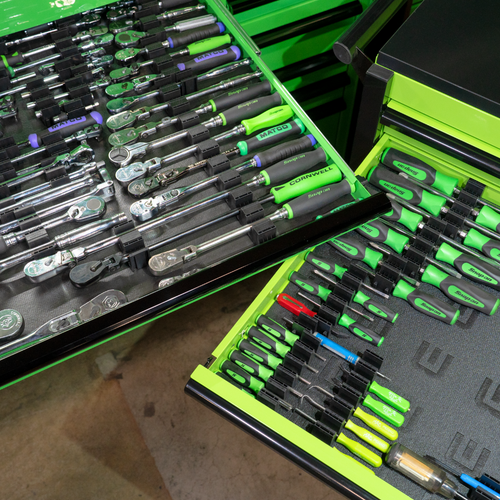
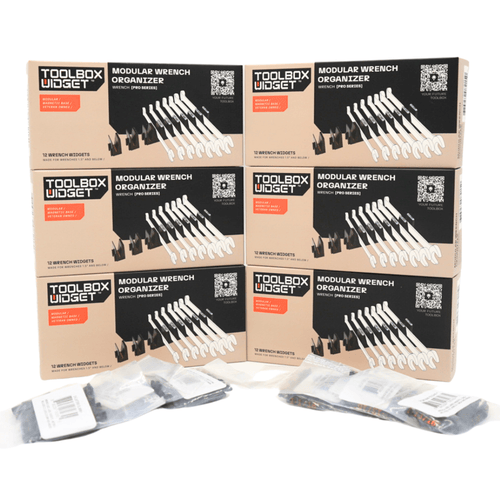
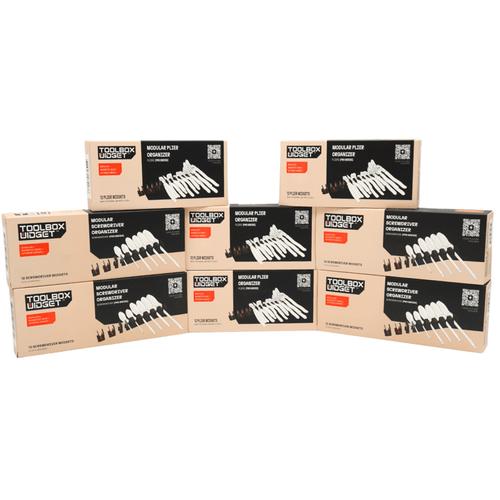
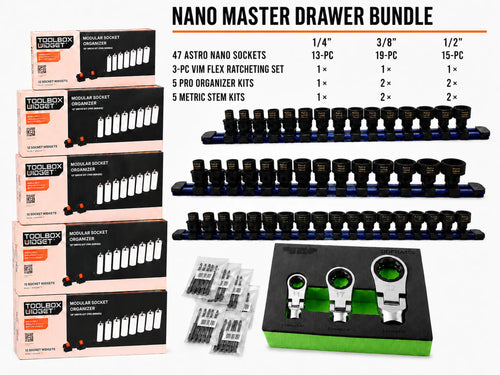
Every drawer insert on the market is really an argument about material. A printed widget is chosen because it prints. Foam is chosen because it's cheap to cut. A tray is chosen because it moulds fast. None of those decisions started with a mechanic. Ours is TPO rubber on a magnetic steel base, because that is what survives heat, brake clean, a dropped ratchet and a truck tyre — and because the people who designed it have all four of those things happen to them.
Straight answer: if your box is aluminium, none of this works and we'd rather tell you now. If you print your own and enjoy it, that's a genuinely good hobby — just don't put a printed part under a torque wrench in a July truck cab. Everyone else: keep reading.
The differences that show up in month six, not in the unboxing.
| Criteria | Toolbox WidgetTPO rubber · magnetic | 3D-PrintedFilament | Foam InsertsCut to shape | Plastic TraysRigid moulded |
|---|---|---|---|---|
| The material | ✓TPO rubber, chosen for shop conditions — flexible, chemical-resistant, and it holds its shape | ✕PLA or PETG filament, printed in layers. Chosen because it prints, not because it performs | ✕Open-cell foam, cut to a shape. Cheap to produce, and it behaves like it | ✕Rigid injection-moulded plastic. Stiff, cheap, and it has no give at all |
| A hot truck cab or a sun-baked bay | ✓Holds its shape and its grip. These live in the harshest environments mechanics work in | ✕PLA starts to soften and sag well below the temperature a closed cab hits in July | ✕Fine on heat, but it takes a set and never comes back | ✕Can warp out of true, and cheap plastic goes brittle with UV and age |
| Oil, brake clean and solvent | ✓Wipe it or rinse it. Nothing porous to soak it up, nothing that goes brittle | ✕Layer lines trap it. Some filaments craze or go cloudy on contact with solvent | ✕Soaks it up and keeps it. Stained pockets are permanent and they smell | ✕Usually holds up, but oil on smooth plastic makes it slick |
| Dropped, stood on, run over | ✓Flexes and comes back. Ours have been run over and gone straight back in the drawer | ✕Snaps along the print layers. That's the weak axis, and it's the one that gets loaded | ✕Crushes. Once a pocket is compressed it's a loose pocket forever | ✕Cracks. Rigid plastic has one failure mode and it isn't a gentle one |
| Grip on the tool | ✓TPO grips the tool. It sits where you put it instead of rattling around the slot | ✕Hard, smooth plastic. Tools slide and rattle in the slot | ✕Holds by shape, not by grip. A worn pocket is a rattling pocket | ✕Smooth plastic against smooth chrome. Tools slide the moment the drawer moves |
| Staying put in the drawer | ✓Strong magnet on a steel backing plate. Slam the drawer, nothing moves | ✕Usually no magnet at all, or one glued into a pocket that eventually lets go | ✕Friction only. Slam the drawer hard enough and the whole insert travels | ✕Friction only. The tray walks to the back of the drawer and takes the layout with it |
| Spotting a missing tool | ✓Empty slot goes orange. You read it from across the bay, not by counting | ✕Whatever colour the filament was. An empty slot looks like the rest of the print | ✕An empty pocket is exactly the same colour as the foam around it | ✕An empty slot reads as an empty slot — same colour as every other slot |
| Reading the size | ✓High-visibility raised size labels you can read through grease and under bad shop light | ✕Printed or embossed text in the same colour as the part. Low contrast by definition | ✕Whatever you wrote on it with a marker, until the marker wears off | ✕Moulded-in, same colour as the tray, and unreadable once it's greasy |
| Changing the layout | ✓Snap widgets in or out with your hands. Under a minute, no tools, no cutting | ✕Re-model it, then re-print it. Hours per part, and only if you own a printer | ✕Cut new foam. The layout is decided the day you cut it | ✕Fixed. What you bought is what you have |
| Who designed it | ✓Built by mechanics, not suits. Veteran-owned. 25+ patents. First modular system in the category | ✕A file someone uploaded. No design authority, no accountability, no support | ✕Generic drawer fill, sized to a specific chest | ✕Sourced to a price point, not designed against a job |
| When it breaks | ✓No-BS Lifetime Warranty. It breaks, we replace it. 60-day money-back on top | ✕Print another one. You are the warranty department | ✕Consumable by design. When it's chewed up you buy it again | ✕Buy another one |
The three comparison columns describe those product categories generally — printed filament organizers, cut-foam inserts, and rigid moulded trays — and are not directed at any specific brand or manufacturer. Materials and construction vary; check the specific product you're considering. Magnetic organizers require a ferrous steel drawer.
Everything else in this category is chosen for how easy it is to make. TPO was chosen for what happens after it leaves the factory — heat, brake clean, drops, and the occasional tyre.
PLA softens well below the temperature a closed truck cab reaches on a summer afternoon, and it fails along the print layers — the exact axis that gets loaded when you lean on a drawer.
No give at all. Rigid plastic has one failure mode, and UV plus age makes it brittle enough to find it.
TPO rubber: flexible, chemical-resistant, and it holds its shape in the harshest environments mechanics work in. Ours have been run over and gone straight back in the drawer.
Organized means the tool is where you left it. Smooth plastic against smooth chrome is a slide waiting to happen — add a film of oil and it is guaranteed.
Hard, smooth surfaces. Tools rattle in the slot, creep out of position, and a drawer that moves is a drawer that reorganizes itself.
Holds by shape rather than grip. Once a pocket takes a set, it is a loose pocket permanently.
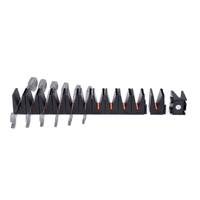
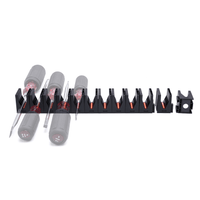
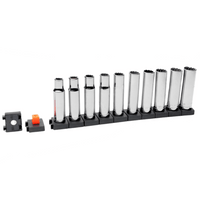
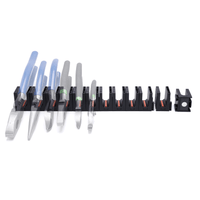
TPO grips the tool, and a strong magnet on a steel backing plate grips the drawer. Slam it, drive it, put it on a lift — the row does not move.
Two jobs, both about speed: telling you a tool is missing, and telling you which size you are reaching for. Most of the category does neither.
An empty pocket is the same colour as the foam, the print, or the tray around it. Sizes are moulded or printed in that same colour, which makes them unreadable the moment grease gets on them.
An empty slot shows orange — visible from across the bay. High-visibility raised size labels sit in the slot and stay readable through grease and under bad shop light.
Toolbox Widget brought the modular organizer to this category, and it is protected by 25+ patents. Most of what followed copied the idea and left out the material and the magnet.
The layout is finished the day it is cut or moulded. A new tool means a razor knife, a new tray, or a loose tool in the drawer.
Re-model, re-slice, re-print. Hours per part, and only if you own the printer and want to spend the evening on it.
Widgets come as singles that clip together, so a run is exactly as long as you need. A 4-foot box carries 4 feet of widgets. Adding one takes under a minute and no tools at all.
This is the part that never shows up on a spec sheet, and it is the reason every other line on this page reads the way it does.
A printed file from an unknown source, or a moulded part sourced to a price by someone who has never had brake clean run down their wrist.
Veteran-owned, designed by working mechanics, protected by 25+ patents, and backed by 14,000+ positive reviews and a No-BS Lifetime Warranty. If it breaks, we replace it.
Different bays, same problem: a drawer that has to stay organized while somebody works out of it all day.
Tool control is not a preference, it is the job. An empty slot that goes orange is a visual inventory check every time the drawer opens — before the panel goes back on.
Standardize every box in the shop on the same layout, audit a bench in seconds, and stop replacing tools that were never actually lost. Lifetime warranty means one purchase, not a line item.
Heavy tools, heavy hands, and drawers that get slammed. TPO takes the abuse and the magnets keep the row put whether the box is in the bay or on the truck.
Flat-rate means the clock is the enemy. Every tool in a fixed, labelled, high-visibility slot removes the ten seconds a day that turns into hours a month.
The box moves at highway speed. Friction-only trays do not survive that; a magnet on a steel backing plate does.
Field service, dust, temperature swings, and no parts store nearby. Gear that flexes instead of cracking is the only kind worth loading in the truck.
Start with the one drawer that annoys you most. Add the next one when you want to — the system you buy today still fits the one you buy in two years.
You are building the set you will carry for a career. Organize it from day one with something that grows tool by tool instead of forcing a full-set purchase now.
Each kit covers one run of tools. Add what you need, watch the total — hit $120 and 15% comes off, hit $139 and shipping's on us.

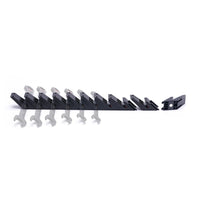
Yes — that's what the magnet and the steel backing plate are for. Each widget magnet grips the steel drawer floor and the plate keeps the magnet seated, so the row stays where you set it rather than travelling to the back. Mobile techs run these in service trucks specifically because the tools stay upright and put while the vehicle's moving.
If you own a printer and enjoy the tinkering, printing organizers is a good hobby and we will not pretend otherwise. The gap is the material and the magnet. Common filaments soften at temperatures a closed truck cab reaches in summer, and they fail along the print layers — the axis that gets loaded when you lean on a drawer. Printed parts also rarely carry a proper magnet and steel backing plate, so the row is held by friction. TPO rubber, a real magnet, and orange indicators are the three things a print does not give you.
That is exactly why it was chosen. TPO is flexible and chemical-resistant, it holds its shape in the harshest environments mechanics work in, and it wipes or rinses clean instead of absorbing what you spill on it. It flexes under load and returns — ours have been run over and gone back in the drawer.
No, and we'd rather say so up front. Magnets need ferrous steel to grip. If your drawers are aluminium or plastic, the widgets have nothing to hold on to and a foam or fixed tray insert is the better call for that box. If you've got a mix, run widgets in the steel drawers.
Count the tools going in that drawer and divide by 12, then round up — most kits come with 12 organizers. For very large wrenches, or if your box rides in a vehicle, some people run two widgets per wrench, so count on the higher side. Widgets come as singles that clip together, so an extra kit is never wasted — it just extends the run.
They can, but every millimetre between the magnet and the steel costs you holding power. A thin liner is usually fine; a thick foam-backed one isn't. If you want both, our Premium Drawer Liners are made to work with the system rather than against it.
You add widgets. Pull the run apart at the clip, drop the new one in, push it back together — no cutting, no adhesive, no new insert. That's the entire argument against foam in one sentence: your tool set is going to change, and the drawer should be able to change with it.
Send them back within 60 days for your money back. If one ever breaks, the No-BS Lifetime Warranty covers it — we replace it, no fine print, no receipt archaeology.
TPO rubber that doesn't crack, magnets that don't let go, high-visibility labels you can read through grease, and an orange indicator the second a tool doesn't come home. Built by mechanics, not suits. Veteran-owned. Backed for life.